Lincoln Cent Errors by Year: Complete Checklist
1909
- 1909-S VDB – Not an error, but a highly sought-after key date with low mintage.
- 1909 Doubled Die Obverse – Strong doubling on “LIBERTY” and parts of Lincoln’s profile.
1917
- 1917 Doubled Die Obverse – Noticeable doubling on the date and motto.
1922
- 1922 No D – The only year cents were minted exclusively in Denver; some lack the mintmark entirely due to die wear.
1943
- 1943 Bronze Cent – Struck on leftover copper planchets from 1942 instead of steel. Extremely rare and valuable.
- 1943-D Bronze Cent – Scarcer still, with very few known examples.
- 1943 Steel Cent Doubled Die – Doubling seen on “IN GOD WE TRUST” and “LIBERTY.”
1944
- 1944 Steel Cent – Transitional error; struck on leftover steel blanks instead of copper.
1955
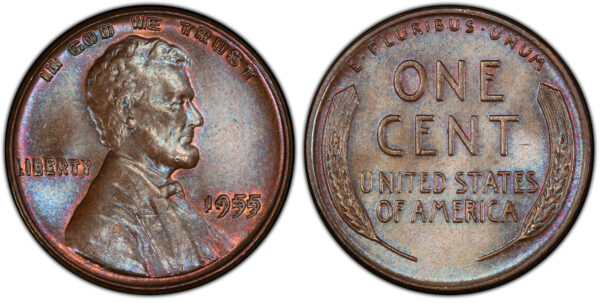
- 1955 Doubled Die Obverse – One of the most dramatic and popular doubled die coins. Doubling is bold on all obverse lettering.
1960
- 1960 Small Date Over Large Date – Notable overdate variety that’s especially prized in proof condition.
1969
- 1969-S Doubled Die Obverse – Extremely rare. Strong doubling on “LIBERTY” and “IN GOD WE TRUST.”
1970
- 1970-S Small Date – Scarce in high grades and found in proof and mint sets.
- 1970-S Doubled Die Obverse – Significant doubling on the date and legend.
1972
- 1972 Doubled Die Obverse – Strong doubling visible on the date and motto; one of the most well-known DDOs after 1955.
1982 (Transitional Year – Not Traditional Errors)
- Both copper and zinc planchets were used during production.
- Cents exist in Small Date and Large Date varieties for each composition.
- Collectors search for the elusive 1982-D Small Date Copper, though no confirmed examples exist.
- Transitional and off-metal errors may occur, making this a hotbed for careful variety hunting.
1983
- 1983 Copper Planchet Error – Struck on leftover bronze planchets; weighs ~3.11g and is extremely rare.
- 1983 Doubled Die Reverse – Doubling found on the Lincoln Memorial, motto, and denomination.
1984
- 1984 Doubled Ear – Distinct extra earlobe below Lincoln’s portrait; widely collected.
1992
- 1992 Close AM (P & D Mints) – Reverse design meant for proof coins mistakenly used on circulation strikes. Rare and desirable.
1995
- 1995 Doubled Die Obverse – Doubling visible on “LIBERTY” and “IN GOD WE TRUST.” Common but popular.
1998, 1999, 2000
- Wide AM Reverse – Reverse spacing intended for proof coins appears on circulation issues, creating collectible varieties.
2004–2006
- Die Adjustment Strikes / Missing Details – Coins may have weak strikes or missing elements due to debris or die fatigue.
2009
- Lincoln Bicentennial Series – Multiple reverse designs released to celebrate Lincoln’s 200th birthday. Look for clashed dies and die cracks on early strikes.
2017-P
First Cent with a “P” Mintmark – Introduced for the 225th anniversary of the U.S. Mint. Not an error, but a one-year-only issue.